Choosing the right Mobile Shelving system begins with the room, not the catalogue. Measure ceiling height, aisle width, floor condition, and expected load. A compact archive may need high-density storage. A busy records office may need faster access and wider walkways. These goals can conflict.
David H. Marsh, a veteran mobile-storage consultant, explains, “The best Mobile Shelving system balances capacity, access, safety, and future change.” That principle deserves attention. More shelves do not always create a better workplace. A tightly packed installation can slow retrieval, restrict movement, and frustrate staff. I have seen teams focus on storage volume while overlooking handle height, lighting, and emergency access. That mistake is easy to repeat.
Think about daily use. Will staff retrieve folders, tools, museum objects, or boxed inventory? Consider shelf depth, cabinet weight, locking options, and labeling visibility. Manual systems can suit smaller collections. Electrically assisted systems may support heavier loads and frequent movement. However, they require suitable power planning and trained users. Safety sensors are valuable, but they do not replace sensible operating procedures.
Check the floor before selecting a track system. Uneven surfaces can affect alignment and long-term performance. Ask suppliers for load ratings, maintenance requirements, installation references, and warranty terms. Request a layout drawing, not only a product photograph. A realistic drawing reveals wasted corners and uncomfortable aisle positions.
There is no perfect configuration. Needs change. Budget pressure changes them faster. The right decision is practical, evidence-based, and open to revision. Mobile Shelving should save space without making access feel difficult. That balance is the real measure of value.
Understanding Mobile Shelving Systems and Their Main Types
How to Choose the Right Mobile Shelving?
Understanding Mobile Shelving Systems and Their Main Types
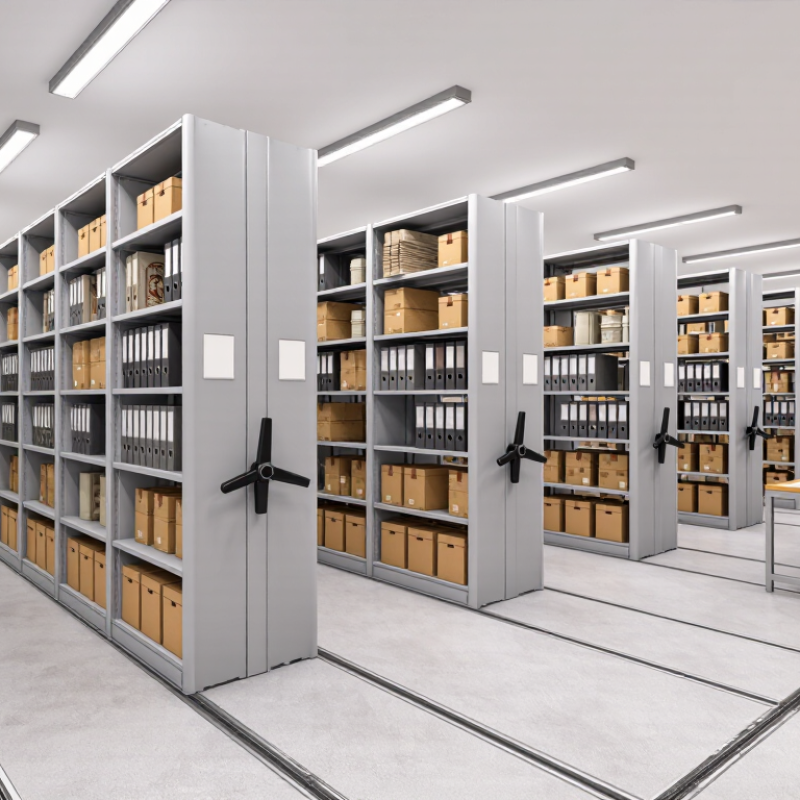
Mobile shelving systems place storage units on floor-mounted rails. The units move together, creating one accessible aisle when needed. This design can increase storage capacity without expanding the room. In practice, the best choice depends on item weight, access frequency, floor quality, and user habits. A narrow archive room may benefit greatly, but poor planning can make daily retrieval frustrating.
Manual mobile shelving uses hand wheels. It suits lighter loads and occasional access. Mechanical-assist systems reduce physical effort through gearing. They work well where shelves are used throughout the day. Powered systems use electric motors and controls. They are useful for heavier loads, wider units, or users needing easier operation. Some systems also include safety sensors and aisle lighting. These features improve control, but they add maintenance needs and installation costs.
Tips: Measure the real aisle, not just the empty floor. Leave space for doors, columns, and turning movements. Check the floor’s load capacity before installation. Store heavy files on lower levels. Label each bay clearly. Test one loaded section before ordering the full system. That small trial can reveal noise, awkward handles, or slow movement. I have seen well-designed layouts fail because staff avoided the farthest aisle. Access matters as much as capacity.
Assessing Storage Space, Capacity, and Accessibility Requirements
How to Choose the Right Mobile Shelving?
Assessing Storage Space, Capacity, and Accessibility Requirements
Begin with the room, not the shelving catalogue. Measure wall lengths, ceiling height, door swings, columns, vents, and electrical points. A mobile system can use narrow aisles, but it still needs safe access for people and equipment. Record the available floor area and check the floor’s load rating with a qualified professional.
Estimate current storage volume by counting files, boxes, binders, or containers. Then add realistic growth for the next three to five years. Weight matters too. Paper files are surprisingly heavy. Calculate the total load for each shelf, bay, and moving carriage. Do not rely on attractive capacity figures without checking shelf spacing and evenly distributed loads. In a busy archive, one crowded section can affect the entire system. A perfect layout is rarely possible. Leave some flexibility for awkward items and changing work habits.
Tips: Mark the proposed aisles with tape before installation. Walk through them with a loaded cart. Check whether two users can pass safely. Keep frequently used materials near the easiest access point. Review handle height, controls, lighting, and emergency routes. Accessibility needs may vary, so involve actual users during testing. I often find that a small unused gap prevents larger problems later.
How to Choose the Right Mobile Shelving?
Assess storage space, capacity, and accessibility requirements before selecting a shelving layout.
The comparison uses practical planning ranges for clear access aisles and storage density. Wider aisles generally improve accessibility, while narrower aisles and movable carriages can increase usable storage capacity. Final dimensions should be checked against local building regulations, fire codes, handling equipment, and accessibility requirements.
Comparing Manual, Mechanical, and Powered Shelving Options
How to Choose the Right Mobile Shelving?
Manual, mechanical, and powered shelving solve different storage problems. Manual systems move by handwheels or handles. They suit lighter loads, lower traffic, and controlled access. Mechanical systems use chain or gear assistance. They reduce pushing effort while keeping costs moderate. Powered shelving uses electric motors and controls. It fits heavy loads, frequent retrieval, and accessibility requirements.
The 2024 MHI Annual Industry Report identifies automation as a major supply-chain investment priority. However, automation is not automatically efficient. A powered aisle may save labor, but it needs electrical planning, inspections, and trained operators. Manual shelving can be faster for a small archive with only occasional access. Mechanical shelving often works well in records rooms, parts storage, and compact stockrooms. Measure aisle width, load weight, retrieval frequency, floor condition, and future growth. A beautiful layout can still fail during a busy shift.
Tips: Mark the busiest shelves for testing. Time ten retrievals. Compare effort, noise, and access delays. Ask staff where jams happen. Keep heavier items between waist and shoulder height. Review the 2023 U.S. Bureau of Labor Statistics report on workplace injuries when assessing manual handling risks. Do not choose powered equipment only because it looks advanced. My own preference is cautious: pilot one aisle first, because real behavior often disagrees with the spreadsheet.
Evaluating Safety, Durability, and Installation Considerations
How to Choose the Right Mobile Shelving?
Evaluating Safety, Durability, and Installation Considerations
Safety should guide every mobile shelving decision. Check the rated load for each shelf, bay, and moving carriage. Do not estimate capacity from appearance. A strong-looking frame may still bend under uneven weight. Look for anti-tip features, controlled movement, emergency stops, and clear aisle indicators. Shelves should move smoothly without sudden resistance. Keep heavier files or containers on lower levels. This reduces tipping risk and improves daily handling.
Durability depends on more than thick steel. Inspect weld quality, coating consistency, wheel construction, and corrosion resistance. Test the system with real storage loads, not empty shelves. Watch for floor vibration, unusual noise, or uneven tracking. Small problems grow quickly. Maintenance records also matter. Ask how often rails, brakes, and drive components require inspection. A neglected system may become unreliable, even when its original materials were excellent.
Installation requires accurate measurements and a stable floor. Measure ceiling height, doorway width, aisle clearance, and electrical access before delivery. The floor must support concentrated loads without serious movement or cracking. Qualified installers should level the rails, secure the structure, and test safety controls. One common mistake is treating installation as simple assembly. It is not. In practice, site conditions can challenge the original plan, and adjustments may be necessary. Leave enough space for maintenance access. A beautiful layout is less useful when technicians cannot reach the moving parts.
Selecting the Best Mobile Shelving System for Your Budget
How to Choose the Right Mobile Shelving?
Selecting mobile shelving for a limited budget requires more than comparing quoted prices. Measure your archive or storage room first. Record wall lengths, aisle widths, ceiling height, floor condition, and expected growth. A compact system may cost less initially, but weak flooring or complex installation can change the final figure quickly.
In site planning, separate purchase costs from operating costs. Include rails, anchoring, delivery, installation, lighting changes, maintenance, and staff training. The 2024 WERC DC Measures Annual Report lists 99.5% as the median inventory-accuracy benchmark. That target makes smooth access and clear labeling financially important. A cheaper system can waste labor when employees search through crowded rows.
Start with manual mobile shelving for light use and stable inventory. Consider powered movement only when storage volume, access frequency, or user safety justifies it. The 2024 MHI Annual Industry Report shows that many organizations are increasing automation investment, yet adoption still depends on budget and operational readiness.
Do not automate a poor layout. A spreadsheet can still lie. Leave room for one or two future sections, even if that reduces today’s capacity. I have found that the lowest quotation often excludes floor preparation and after-installation support. Request a line-by-line proposal, a load rating, safety controls, and a realistic delivery schedule. Then compare total ownership cost over five years, not only the purchase price.
FAQS
It places storage units on floor-mounted rails. The units move together, creating one usable aisle. This design can increase capacity without enlarging the room.
Manual systems use hand wheels. They suit lighter loads and occasional access. They usually cost less. However, frequent movement may become tiring.
Mechanical-assist systems reduce effort through gearing. They work well when staff use shelves throughout the day. They suit moderate loads and repeated access. The handles still need practical testing.
Powered systems use electric motors and controls. They suit heavier loads, wider units, or easier operation. Sensors and aisle lighting can improve control. They also increase installation and maintenance costs.
Measure walls, ceiling height, doors, columns, vents, and electrical points. Measure the real aisle space. Do not measure only empty floor area. Leave room for carts and turning movements.
Estimate current files, boxes, binders, or containers. Add realistic growth for three to five years. Keep flexibility for awkward items and changing habits. A completely full layout may fail quickly.
Calculate weight for each shelf, bay, and moving carriage. Distribute loads evenly. Store heavy files on lower levels. Check the floor’s load rating with a qualified professional.
Mark proposed aisles with tape. Walk through them using a loaded cart. Check door access, handle height, controls, lighting, and emergency routes. Ask actual users to test the layout. Small gaps matter.
Compare rails, anchoring, delivery, installation, lighting, maintenance, and training. Review ownership costs over five years. Request load ratings and realistic delivery schedules. A low quotation may omit floor preparation. That mistake is expensive.
Conclusion
Choosing the right Mobile Shelving system begins with understanding how different designs support your organization’s storage goals. Options may include compact moving shelves, sliding units, and high-density systems that reduce wasted aisle space. Before making a decision, assess the available room, item volume, load requirements, retrieval frequency, and accessibility needs. A well-planned layout should improve capacity without making frequently used materials difficult to reach.
It is also important to compare manual, mechanical, and powered shelving options based on ease of use, operating speed, maintenance, and available budget. Safety features, structural durability, floor conditions, installation requirements, and future expansion should be reviewed carefully. The best system will provide a practical balance of capacity, accessibility, reliability, and cost while fitting the facility’s daily workflow. By evaluating these factors in advance, organizations can select Mobile Shelving that delivers long-term value and efficient space management.

 Everack