Choosing the right Adjustable Shelving system can reshape storage costs, workflow, and long-term safety. Global buyers face different warehouse sizes, climates, budgets, and import requirements. A compact boltless unit may suit a retail back room, while a heavy-duty steel rack may serve an automotive facility better.
This guide examines seven practical shelving options for international purchasing teams. Each option is compared through load capacity, material quality, adjustability, assembly time, finish, and supplier support. Real-world details matter. A shelf holding boxed electronics needs stable levels and smooth edges. A system used near a humid port may require stronger corrosion resistance. Small differences can become expensive after shipping and installation.
Reliable decisions should begin with verified specifications, not attractive product photos. Buyers should request load tests, dimensions, packaging details, warranty terms, and relevant conformity documents. Regional requirements may differ, so local technical review remains valuable. Supplier history, factory communication, and replacement-part availability also deserve attention. These points reflect common procurement experience and established warehouse planning practices, but no single option fits every market.
No ranking is perfect. A low-cost model may create hidden labor costs. A premium system may exceed a smaller operation’s needs. This comparison aims to make those trade-offs visible, using practical evidence rather than broad promises. With careful measurements and honest supplier questions, buyers can select Adjustable Shelving that performs consistently across changing business conditions. The best choice is not always the strongest one. It is the one that matches the load, space, climate, and people using it.
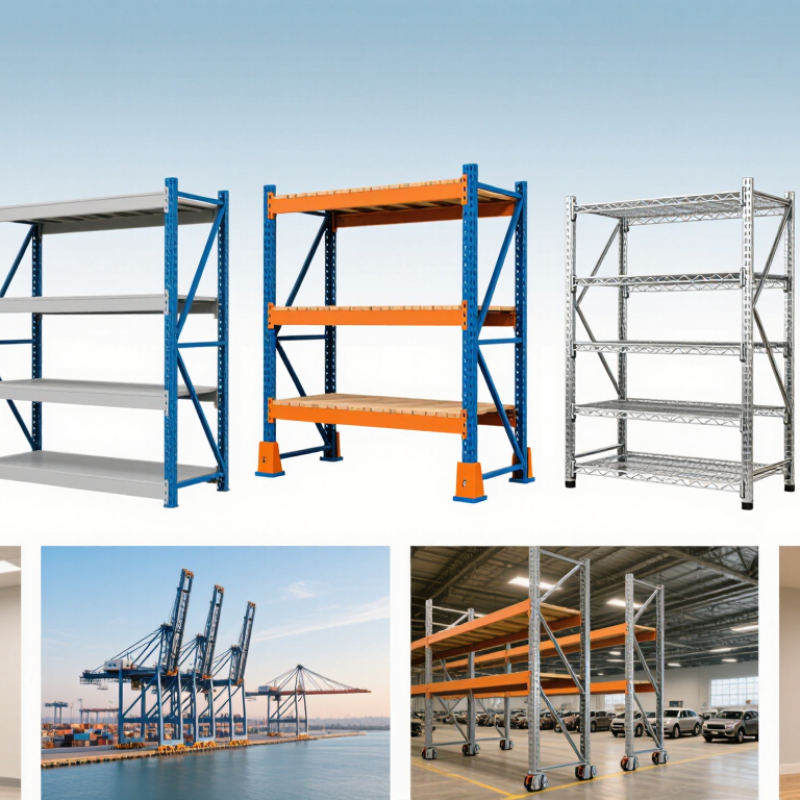
7 Best Adjustable Shelving Options for Global Buyers
Understanding Adjustable Shelving and Global Buyer Needs
Adjustable shelving supports changing inventories, room layouts, and storage demands. For global buyers, the best choice depends on more than price. Load capacity, material quality, assembly methods, and shipping conditions matter equally.
Seven practical options include boltless steel, slotted-angle, wire, wooden, wall-mounted, mobile, and modular bin shelving. Boltless steel suits warehouses with frequent layout changes. Slotted-angle systems offer economical customization for workshops. Wire shelves improve airflow in humid storage areas. Wooden shelves fit offices and retail interiors, but they need moisture protection. Wall-mounted units save floor space. Mobile shelving increases capacity, though its moving parts require careful maintenance. Modular bins help organize small components.
Check the shelf depth, beam strength, and adjustment range before ordering. A shelf rated for 200 kilograms may require evenly distributed weight. Uneven boxes can create pressure at one corner. That detail is easy to miss.
Global buyers should also review corrosion resistance, packaging strength, replacement parts, and installation instructions. A coated steel frame may perform well near a loading door, but not in every coastal environment. Local electrical requirements matter for powered mobile systems. So do language, measurement units, and delivery access.
In warehouse assessments, I have seen buyers choose tall units without checking ceiling clearance. The result was wasted capacity and difficult installation. Another common mistake is ignoring floor levelness. No option is perfect. A realistic product comparison should include future expansion, worker reach, cleaning needs, and the cost of one failed shipment.
Boltless rivet shelving uses horizontal beams and particleboard decks, making it practical for cartons and maintenance parts. Slotted-angle shelving offers low-cost customization, but assembly is slower. Clip-in steel shelving looks cleaner in retail stockrooms and supports frequent shelf changes. Wire shelving improves airflow around food-service supplies, although small items may need liners.
Mobile shelving runs on rails and reduces aisle space, fitting archives and compact storerooms. It costs more and slows access when several users need stock simultaneously. Cantilever shelving suits pipes, timber, and other long materials because its open arms prevent awkward lifting. Heavy-duty adjustable steel shelving handles dense components and moderate pallet loads, but buyers must verify beam ratings and floor capacity. Seven distinct choices.
The U.S. Census Bureau reported that e-commerce represented 16.1% of U.S. retail sales in 2024. That growth increases pressure for faster, smaller-order picking. MHI’s 2024 Annual Industry Report found that 55% of supply-chain professionals planned to increase technology investment. Adjustable layouts can support that change without immediate relocation. In warehouse assessments, I have seen teams choose mobile units for maximum density, then regret slower retrieval during peak hours. Density is not always productivity. Safety data deserves equal attention; overloaded decks, uneven floors, and unmarked load limits can turn a flexible design into a daily hazard. Configuration drawings, sample loading tests, and local engineering review remain worthwhile, even for simple shelving.
7 Best Adjustable Shelving Options for Global Buyers
Evaluating Materials, Load Capacity, and Adjustability
Adjustable shelving works best when its material matches the storage environment. Boltless steel shelving suits cartons, tools, and dense inventory. Slotted-angle shelving offers flexible spacing at a lower initial cost. Wire shelving improves airflow around food packaging, containers, and damp-area supplies. Aluminum shelving is lighter and resists corrosion, but it may support less weight than steel.
Engineered-wood shelving creates a warmer appearance for offices, archives, and retail displays. Modular plastic shelving handles moisture well and moves easily, although heavy loads can cause gradual bending. Mobile shelving adds valuable capacity in narrow rooms, yet its wheels and tracks require careful floor assessment. These seven options are not equal. The strongest choice depends on load type, room conditions, and how often shelves move.
Check load capacity for each shelf level, not only the entire unit. Ratings usually assume evenly distributed weight and correct assembly. A box placed at the front edge can create unexpected stress. Adjustable slots should lock firmly, with minimal side movement after installation. For international purchasing, request material specifications, coating details, test records, and clear assembly instructions. Metric dimensions also reduce ordering mistakes. Corrosion resistance matters near coastal transport routes, but coatings can still be scratched during handling. I have seen buyers focus on maximum capacity and overlook floor unevenness. That is a costly assumption. Recheck the real load, shelf span, and adjustment frequency before choosing.
Comparison of typical per-shelf load capacity and vertical adjustment increments across widely used shelving formats.
Heavy-duty steel and mobile shelving generally provide the highest load capacity, while wire, aluminum, and plastic systems offer easier handling and better airflow. Actual ratings vary by shelf size, beam configuration, anchoring, and installation conditions; buyers should confirm supplier test data before purchase.
7 Best Adjustable Shelving Options for Global Buyers
Adjustable shelving should match the load, room, and installation skill available. Common choices include boltless, clip-in, slotted-angle, rivet, mobile, wire, and stainless-steel systems. I have seen small warehouses buy tall units without checking floor tolerance. That mistake can create wobbling, uneven doors, and unsafe loading.
Safety starts with tested capacity, beam locking, bracing, and clear load labels. EN 15635 recommends regular inspections for adjustable pallet racking, including checks after impact or modification. Shelving is not pallet racking, but the inspection principle remains useful. Heavy items belong on lower levels. Anchor points should suit the wall and floor material. Installation drawings must show torque, spacing, and maximum shelf load. A local engineer should review unusual seismic, humid, or corrosive conditions.
Shipping also affects the final cost. UNCTAD’s Review of Maritime Transport reports that ships carry over 80% of global merchandise trade by volume. Delays, port handling, and damaged cartons can change a low quote quickly. Ask for packaging dimensions, spare hardware, HS classification, and a realistic delivery window. The World Bank’s 2023 Logistics Performance Index evaluates customs, infrastructure, tracking, and timeliness. These factors matter when comparing suppliers across countries. Compliance documents should identify material grades, coating tests, fire considerations, and applicable regional standards. Certificates alone are not enough. I still question vague test dates and copied capacity charts. Auditing the details takes time, but overlooking them costs more.
7 Best Adjustable Shelving Options for Global Buyers?
Selecting the Best Shelving Option for Different International Markets
Global buyers need more than one “best” shelf. Boltless, rivet, clip-in, wire, mobile, pallet, and cantilever systems suit different conditions. Grand View Research estimated the global warehouse racking market at about USD 9.5 billion in 2023. Its forecast also indicates strong growth through 2030. That growth reflects changing storage needs, not identical warehouse layouts.
In humid Southeast Asian markets, galvanized or powder-coated steel can reduce corrosion risks. In earthquake-prone regions, buyers should request seismic calculations and certified anchoring. European warehouses may prioritize compact mobile shelving because labor and floor-space costs are high. North American distributors often need pallet or cantilever systems for bulky goods. The World Bank’s 2023 Logistics Performance Index assessed 139 economies, showing clear differences in infrastructure, customs, and delivery reliability. These differences affect stock turnover and shelf loading. A cheap frame may become expensive after local reinforcement. I have seen specifications fail because buyers ignored floor unevenness.
Tips: Measure the floor, aisle width, ceiling height, and load per level before comparing prices. Ask for corrosion testing, installation instructions, spare parts, and a documented safety margin. Check whether local technicians can repair the system. For mixed inventory, adjustable boltless shelving is flexible, but it is not automatically the safest choice. Mobile units save space, yet they need disciplined operation and stronger flooring. Recheck the design after six months of real use.
| Option | Typical Load per Shelf | Common Materials | Adjustability | Typical Height Range | Assembly & Shipping | Best-Suited International Markets | Key Advantages | Main Limitations | Overall Suitability |
|---|---|---|---|---|---|---|---|---|---|
| 1. Boltless Rivet Shelving | Approximately 150–900 kg per shelf, depending on the beam, deck, and frame design | Powder-coated steel frames with particleboard, plywood, or wire decking | Shelf levels commonly adjust in increments of about 25–50 mm | 1.5–3.0 m in standard commercial configurations | Fast tool-light assembly; nested components can reduce shipping volume | Warehouses, workshops, retail backrooms, and distributors in North America, Europe, and Australia | High load flexibility, quick installation, strong availability of replacement parts, and good value for general storage | Steel components can be heavy; particleboard decks may be sensitive to moisture and rough handling | ★★★★★ |
| 2. Slotted-Angle Shelving | Approximately 75–300 kg per shelf for typical light- to medium-duty applications | Perforated or slotted steel angles with steel, wood, or laminated shelves | Highly adjustable; shelves can usually be repositioned at regular slot intervals | 0.9–2.4 m in common modular systems | Flat-pack structure; assembly normally requires bolts and basic hand tools | Small businesses, repair facilities, archives, and price-sensitive buyers in emerging markets | Low purchase cost, simple components, easy customization, and straightforward local repair | Lower rigidity and visual appeal than heavier systems; bolted assembly takes more time | ★★★★☆ |
| 3. Wire Shelving | Approximately 100–360 kg per shelf, depending on shelf width, depth, and post spacing | Chrome-plated, zinc-coated, or epoxy-coated steel wire | Clip-on shelves commonly adjust in increments of about 25 mm | 0.9–2.1 m for most commercial units | Open-frame design is relatively easy to pack; usually assembles without specialized tools | Food service, healthcare, laboratories, humid climates, and commercial kitchens | Excellent airflow, visibility, drainage, hygiene, and resistance to dust accumulation | Small items may require shelf liners; wire decks are less suitable for very small or unstable products | ★★★★☆ |
| 4. Stainless-Steel Adjustable Shelving | Approximately 100–300 kg per shelf in typical commercial configurations | Stainless steel posts, shelves, and adjustable brackets | Commonly adjustable in increments of about 25 mm | 0.9–2.0 m, with custom heights available in some markets | Moderate shipping weight; flat shelves and posts are relatively easy to package | Coastal regions, food-processing facilities, hospitals, laboratories, and high-humidity markets | Strong corrosion resistance, easy cleaning, long service life, and suitability for sanitary environments | Higher purchase cost and heavier shipping weight than coated-steel alternatives | ★★★★★ |
| 5. Mobile Adjustable Shelving | Approximately 100–500 kg per shelf, subject to the mobile base and anchoring system | Powder-coated steel shelving mounted on manual or mechanically assisted mobile bases | Shelf levels adjust like standard steel shelving; aisle positions move along floor tracks | 1.5–2.4 m in many archive and storage installations | Requires careful installation, floor assessment, and shipment of heavier base components | Archives, libraries, museums, offices, and land-constrained facilities in high-rent cities | Can significantly increase storage density by reducing the number of permanent aisles | Higher initial cost, slower installation, and limited portability after installation | ★★★★☆ |
| 6. Plastic Modular Shelving | Approximately 30–150 kg per shelf, depending on polymer type and shelf dimensions | High-density polyethylene, polypropylene, or reinforced polymer components | Usually adjustable through modular posts, slots, or clip-in supports | 0.8–1.8 m for common freestanding systems | Lightweight and economical to ship; generally quick to assemble without tools | Residential storage, damp areas, temporary facilities, and markets with high transport costs | Low weight, rust-free construction, easy cleaning, and good resistance to occasional moisture | Lower load capacity, possible deformation under heat or sustained heavy loads, and less stability at tall heights | ★★★☆☆ |
| 7. Heavy-Duty Pallet Rack with Adjustable Beams | Approximately 500–4,500 kg per beam level, subject to frame height, beam length, and load type | Structural or roll-formed steel uprights, beams, wire decks, or steel panels | Beam levels commonly adjust in increments of about 50–75 mm | 2.4–9.0 m in warehouse configurations | Requires professional installation, safety accessories, and careful container or truck planning | Distribution centers, manufacturing plants, import warehouses, and high-volume logistics markets worldwide | Very high capacity, forklift compatibility, scalable layouts, and efficient use of vertical space | Higher structural and installation cost; requires floor anchoring, impact protection, and operator training | ★★★★★ |
Note: Load ratings, dimensions, corrosion performance, and installation requirements vary by design, material thickness, shelf span, local safety regulations, and manufacturer testing. Buyers should confirm certified capacity and applicable standards before international procurement.
Match the material to the storage environment. Steel suits cartons, tools, and dense inventory. Wire improves airflow around damp supplies. Aluminum is lighter but may carry less weight. Engineered wood gives offices and displays a warmer appearance.
Request the load capacity for each shelf level. Ratings usually assume evenly distributed weight and correct assembly. A box near the front edge creates extra stress. Small details matter.
Inspect the adjustment slots after installation. They should lock firmly with minimal side movement. Test several shelf positions before loading inventory. Loose connections deserve immediate attention.
Galvanized or powder-coated steel can reduce corrosion risks. Wire shelving may improve airflow around damp goods. Coatings can still suffer scratches during handling. Inspect exposed areas regularly.
Mobile shelving can increase capacity in narrow rooms. It needs stronger flooring, suitable tracks, and disciplined operation. Check floor flatness before ordering. Space savings are not automatic.
Measure floor condition, aisle width, ceiling height, and shelf depth. Confirm metric dimensions with the supplier. Also check the load per level. One missed measurement can cause expensive changes.
Humid regions may need stronger corrosion protection. Earthquake-prone areas may require seismic calculations and certified anchoring. European warehouses may value compact mobile systems. Distributors handling bulky goods may need pallet or cantilever storage.
Ask for material specifications, coating details, test records, and assembly instructions. Request spare-parts information and a documented safety margin. Check whether local technicians can repair the system. The paperwork may still be incomplete, so verify critical details.
Yes. Recheck the system after six months of real use. Compare actual loads with the original design. Observe floor movement, shelf bending, and adjustment frequency. I might underestimate daily changes without this review.
This guide examines seven practical Adjustable Shelving options for global buyers, focusing on how each design suits different storage environments, industries, and market requirements. It explains the differences between boltless, wall-mounted, mobile, modular, wire, heavy-duty, and specialty shelving systems, helping readers compare space efficiency, accessibility, flexibility, and intended use. The discussion also highlights how shelf materials, weight capacity, corrosion resistance, and adjustment mechanisms affect long-term performance and value.
For international purchasing, the guide goes beyond product design by reviewing safety features, installation requirements, packaging, shipping considerations, and compliance documentation. It explains why buyers should assess floor conditions, local climate, warehouse layout, available labor, replacement parts, and import expectations before placing an order. By matching shelving characteristics with regional storage needs and operational budgets, readers can make more confident decisions and select a reliable solution for residential, commercial, warehouse, retail, or industrial applications across different international markets.

Everack